
The Scrapbook — No.24
8 short thoughts on French Algiers, British folk and Buddhist wisdom

1 -
“Every artist keeps within himself a single source that during his lifetime nourishes what he is and what he says [...] I know that my source is the world of poverty and sunlight I lived in for so long, whose memory still saves me from two opposing dangers that threaten every artist: resentment and self-satisfaction.”
That’s Albert Camus, writing about his childhood in French Algeria, a place halfway between poverty and sunlight.

This photo from 1920 shows 7-year-old Albert Camus (centre, wearing black suit) in the workshop of his Uncle Etienne in Algiers
2 - Eugène Fromentin was the most sustained artistic chronicler of Algeria across the 1840s–60s. He was a master of capturing the light, dust, and the specific weight of desert air. Here’s a few of his Algerian scenes Camus would have recognised.


3 - Camus’ treatment of envy finds company in the words of Francis Bacon, who writes in Of Envy (1625) that:
“Envy is the vilest affection, and the most depraved; for which cause it is the proper attribute of the Devil, who is called The envious man that soweth tares amongst the wheat by night.”
4 - But it’s the sunshine that will save Camus from envy’s grip
“Among my many weaknesses, I have never discovered that widespread failing, envy: the true cancer of societies and doctrines. [...] The sun that reigned over my childhood freed me from all resentment.”
The Humanities Library has a community of 20,000 followers and over 8,000 subscribers, all of them drawn to philosophy, art, literature, and the strange corners of human experience. If that sounds like you, a paid subscription unlocks the full archive, where we go into far more depth on related themes and ideas.
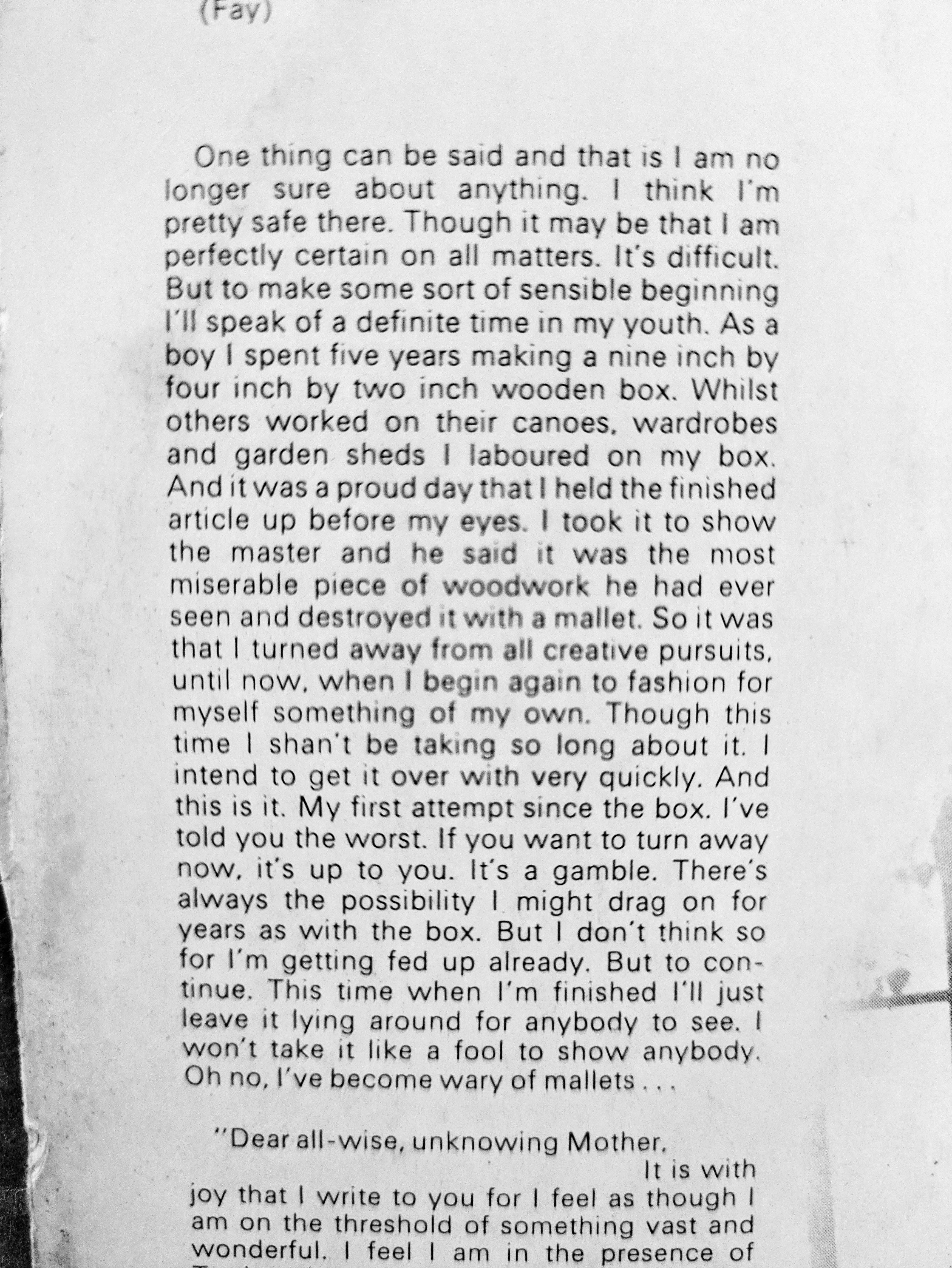
5 - I happened, this week, upon Bill Fay’s self titled debut album rummaging through a charity record crate, and was touched by his modesty in the following passage featured on the sleeve notes. His story about the last time he dared show someone his creative output is a blunt reminder of the responsibility of educators coming into contact with something tender, unfinished, and not yet sure of itself...
6 - The general mood of the album is captured brilliantly by Rob Young in Electronic Eden: Unearthing Britain’s Visionary Music. He writes
“Bill Fay is peopled with characters from an England still in its post-war throes, valiantly soldiering on, living with their dreams, memories and private griefs. Mundane exteriors can shelter deeper hurts, stranger notions. Old May lost her boy in the Great War, but could still belt out sentimental tunes down the boozer, the ‘ones we know so well’. Stan, ‘an innocent soul in a vastly changing world’, scuttling home from the allotment at night with only a watering can to protect himself from being abducted to Mars, ‘or was it Jupiter?’ And Gentle Willie, who went to war, deserted his platoon, built a tower to protect himself, and found himself on his battlements with a ringside seat over even more carnage. These were the damaged, who had fought to preserve England’s green and pleasant land, but felt excluded from the Aquarian Age.”
7 - A few pages earlier he had delivered a veritable who’s who of early seventies British folk influenced singer-songwriters. If this is your bag, then this is some list:
“In Britain, Anne Briggs, Jansch and Renbourn, Bridget St John, Roy Harper, Donovan, Al Stewart, Sandy Denny, Cat Stevens, Ralph McTell, Al Jones, lan A. Anderson, Andy Roberts, Shelagh McDonald, Steve Ashley, Keith Christmas, John Martyn, Kevin Ayers, Marc Brierley, Beverley Martyn, Gillian McPherson, Kevin Coyne, Van Morrison, Meic Stevens, Linda Peters, Bill Fay, Nick Drake, Tim Hollier and Robin Scott delivered songs reporting on the state of the world or the vagaries of their own interior lives, from the political harangue to the intimate confessional.”
8 - I’ll leave you with some Buddhist wisdom, courtesy of Śāriputra as interpreted by Thich Nhat Hanh in The Heart of the Buddha’s Teaching
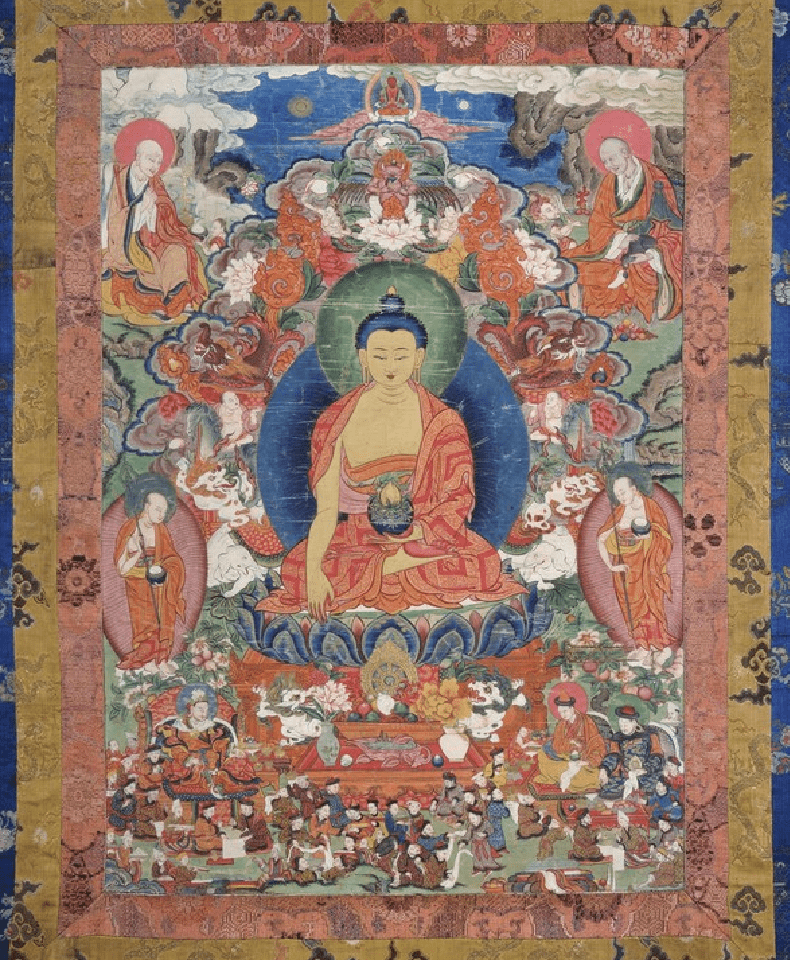
Śākyamuni Buddha with his two principal students, Shariputra (right) and Maudgalyayana (left). Image courtesy of Himalayan Art Resources
Right View is, for Śāriputra, the ability to distinguish between wholesome roots (kushala mula) and unwholesome ones (akushala mula).
“In each of us, there are wholesome and unwholesome roots or seeds in the depths of our consciousness. If you are a loyal person, it is because the seed of loyalty is in you. But don’t think that the seed of betrayal isn’t also in you. If you live in an environment where your seed of loyalty is watered, you will be a loyal person. But if your seed of betrayal is watered, you may betray even those you love. You’ll feel guilty about it, but if the seed of betrayal in you becomes strong, you may do it.”
Until next time, then, keep those wholesome roots watered
Looking to return to my wholesome roots I have ordered Electric Eden, thanks for the tip and for your ongoing enlightening
Cute little Camus!