
The Scrapbook — No. 33
What connects Frankenstein’s monster, food riots in Paris, J.M.W. Turner’s blood-red sunsets, and the Mormon Church?

What connects Frankenstein’s monster, food riots in Paris, J.M.W. Turner’s blood-red sunsets, and the Mormon Church? Its a fun little riddle with a surprisingly coherent answer: all, rather incredibly, can be traced back to the eruption of a single volcano.
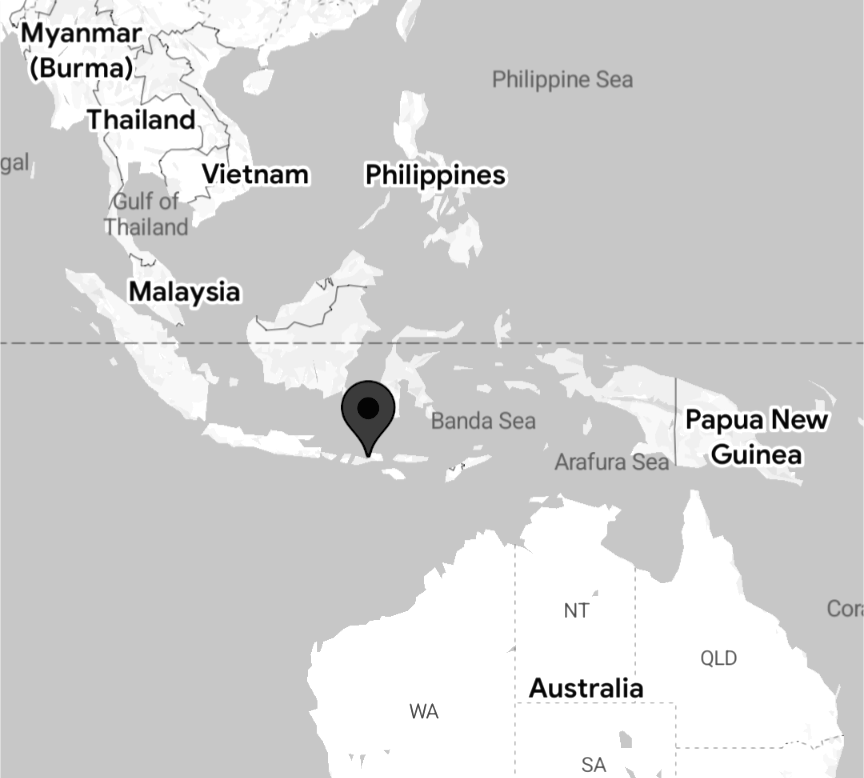
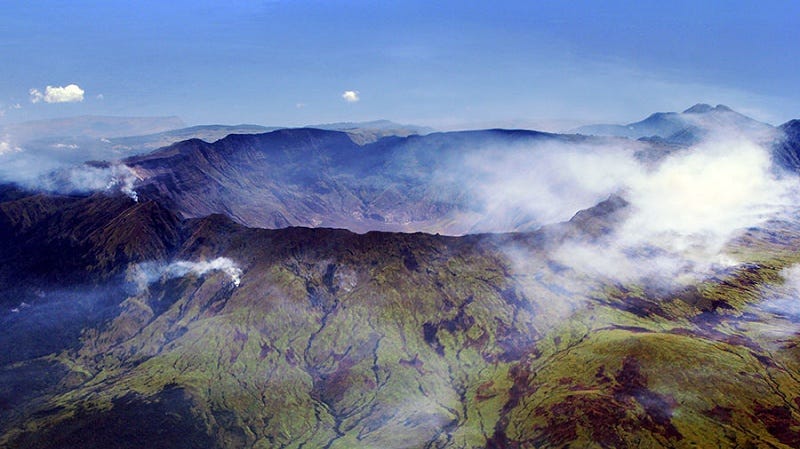
1 - In April 1815, Mount Tambora, on the Indonesian island of Sumbawa (then part of the Dutch East Indies), erupted with a force no human has witnessed before or since. It was the largest volcanic eruption in recorded history, so violent that the mountain lost nearly 4,000 feet of its own height in a matter of days, blown into the sky as ash. Tens of thousands died locally, from the blast, the pyroclastic flows, and the ensuing famine and disease.
But the eruption’s strangest legacy unfolded a year later, thousands of miles away, in places that had never heard of Tambora at all.
2 - The blast threw up an estimated 60 million tonnes of sulphur dioxide into the stratosphere, high enough to begin circling the globe, forming a kind of fine veil that reflected sunlight back into space. The result was, in 1816, temperatures so low that it became known as the year without a summer. Summer temperatures in Europe that year were the coldest of any on record between 1766 and 2000.
3 - The Year Without a Summer was an agricultural disaster. Crops failed across New England, Europe, and eastern Canada. Frost was recorded in July in Connecticut. Switzerland saw snow in August. Grain prices in Europe spiked so violently that food riots broke out in France and Britain. Historian John D. Post called it “the last great subsistence crisis in the Western world”.
4 - But this is a newsletter about culture, so why do I find myself fascinated by a volcanic eruption? Well, the knock-on effects reached into some unexpected corners of culture.
Stuck indoors by relentless cold, wet weather at Lake Geneva that summer, a young group that included Mary Shelley, Percy Shelley, John William Polidori, and Lord Byron amused themselves with a ghost-story-writing contest at Villa Diodati. It was this contest that led Shelley to write Frankenstein and Lord Byron to write “A Fragment”, which Polidori later used as inspiration for The Vampyre, a precursor to Bram Stoker’s Dracula.
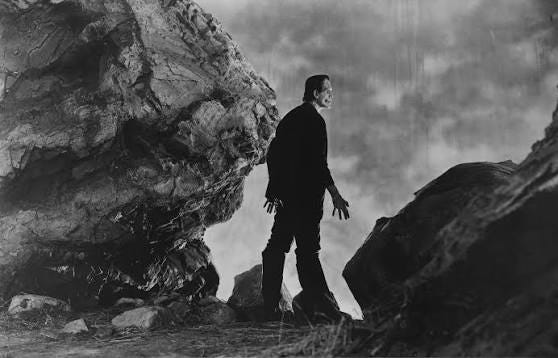
Boris Karloff as Frankenstein, 1931
The Humanities Library has a community of 22,000 followers and over 9,000 subscribers, all of them drawn to philosophy, art, literature, and the strange corners of human experience. If that sounds like you, a paid subscription unlocks the full archive, where we go into far more depth on related themes and ideas.
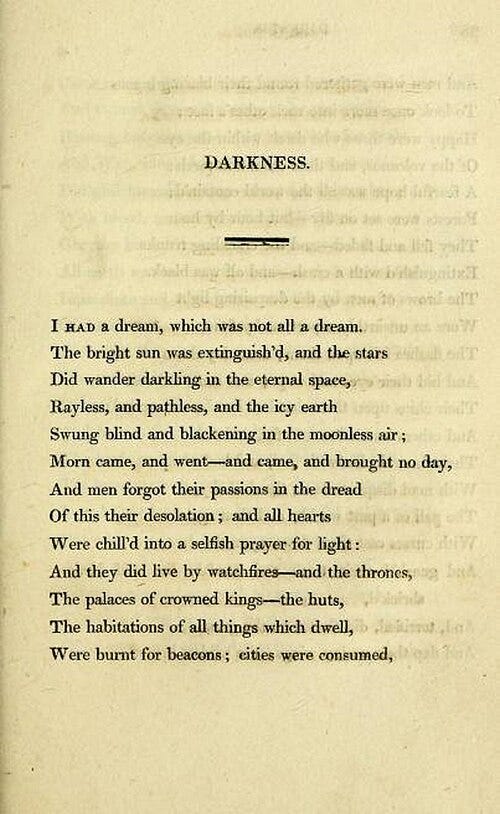
5 - It was the bleakness of that particular summer that led Byron, separately, to write his poem Darkness:
6 - As a story, this is already amazing, but there’s more. Researchers examining paintings from 1500 to 1900 looked specifically at works created near the dates of major volcanic eruptions like the one at Tambora, and found a link between spikes in volcanic activity and a heavier use of red tones in the artwork from those periods. The likely explanation is that the high concentrations of volcanic tephra produced unusually vivid, saturated sunsets, an effect that shows up clearly in J.M.W. Turner’s work and may account for the warm yellow cast that runs through paintings like his 1828 depiction of Chichester Canal.
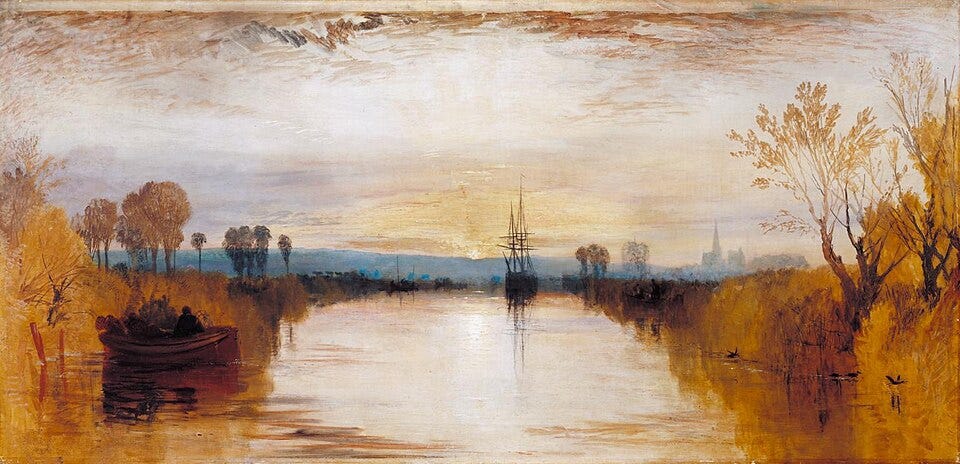
I had always understood Turner as a kind of early forerunner to the impressionists, painting sunsets as they felt rather than as they looked. But perhaps his work was realism, plain and simple, all along.
7 - And it wasn’t just him. Just look at the difference between these Caspar David Friedrich paintings before and after the eruption.
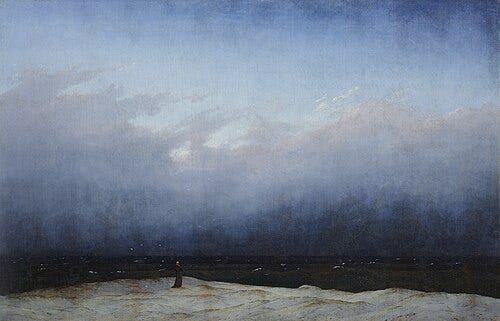
The Monk by the Sea, 1808–1810
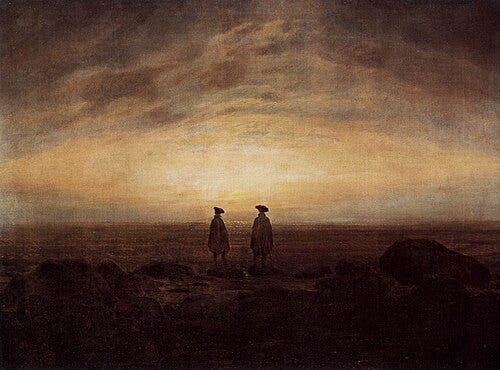
Two Men by the Sea (1817)
8 - One last story, to trace the effects of the eruption through religion, as well as literature and art.
In America, the failed harvests of 1816 pushed farmers off marginal land in New England, accelerating migration to western New York. Historian L. D. Stillwell has documented that Vermont’s population dropped by somewhere between 10,000 and 15,000 people across 1816 and 1817, wiping out nearly seven years’ worth of prior growth in a single stretch. One of the families swept up in this exodus was the Smiths, who relocated from Norwich, Vermont to Palmyra, New York. That relocation set in motion the chain of events that would eventually lead Joseph Smith to found The Church of Jesus Christ of Latter-day Saints, informally known as the Mormon Church.
It’s the sort of chain of causation that makes you wonder what this summer of heat waves might, in two hundred years, turn out to have caused.
That's all for this week! See you next time
You have failed to credit Mary Wollstonecraft Shelley w/ her authorship of Dr Frankenstein and his creatures. Mary wrote this (at the age of 18) all on her own as those stranded were engaged in a contest. She competed against her husband; they did not collaborate.
This is how women's contributions as makers of art & artifacts were ignored for centuries, but we know better than that in 2026 (or at least most of us know better).
Please correct this egregious error and draw attention to the correction in a message to your followers.
What are my bone fides? I hold a Masters degree in British Literature. Accurate attribution is important.
That was so cool! Thank you!