
The Scrapbook — No. 30
Aztec poetry, Misoneism and the writer Borges hero-worshipped

I’ve eight things for you good people this week, all of which I found to be either interesting or beautiful. My wager is, depending on your own disposition, that you'll agree with me on at least three!
1 - I wrote about Carl Jung this week in the main article, so here’s a companion note on the Red Book’s illustrations. He produced them between 1914 and 1930, and thought of the whole project (and perhaps it’s fair to think of the illustrations as the primary material?) as his “confrontation with the unconscious.”


2 - Two weeks ago, I was using the Aztecs as a way into a discussion on George Bataille’s strange economics of excess, which gives me a lovely opportunity to introduce you to some Aztec poetry (something I know not nearly enough about.)
In the fifteenth century, Texcoco was ruled by a man called Nezahualcoyotl. But this guy was a lot more than warrior and strategist: he wrote philosophy, he was an engineer, he built aqueducts and dykes, and he wrote some very beautiful poetry, obsessing over the idea of our impermanence.

3 - Here’s his most famous stanza, translated by John Bierhorst in 1985:
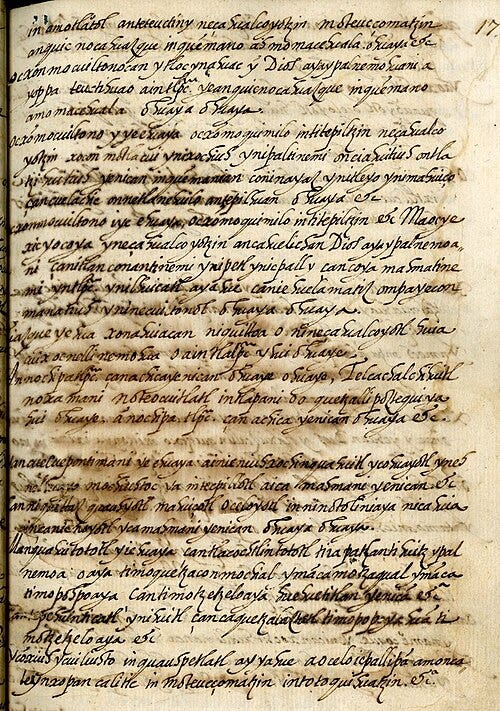
“Tiazque yehua xonahuiacan niquittoa o nineçahualcoyotl huia cuix oc nelli nemohua o a in tlalticpac y hui ohuaye
Annochipa tlalticpac çan achica ye nican ohuaye ohuaye, Tel ca chalchihuitl no xamani no teocuitlatl in tlapani oo quetzalli poztequi yahui oyahue. anochipa tlalticpac. çan achica ye nican ohuaya.”
“We’re to pass away. I say, “Be pleasured!”—I that am Nezahualcoyotl. Ah, do we truly live on earth?
Not forever on earth, but briefly here. Even jades are shattered. Gold, broken. Ah! plumes, splintered. Not forever on earth, but briefly here.”
The Humanities Library has a community of 22,000 followers and over 9,000 subscribers, all of them drawn to philosophy, art, literature, and the strange corners of human experience. If that sounds like you, a paid subscription unlocks the full archive, where we go into far more depth on related themes and ideas.
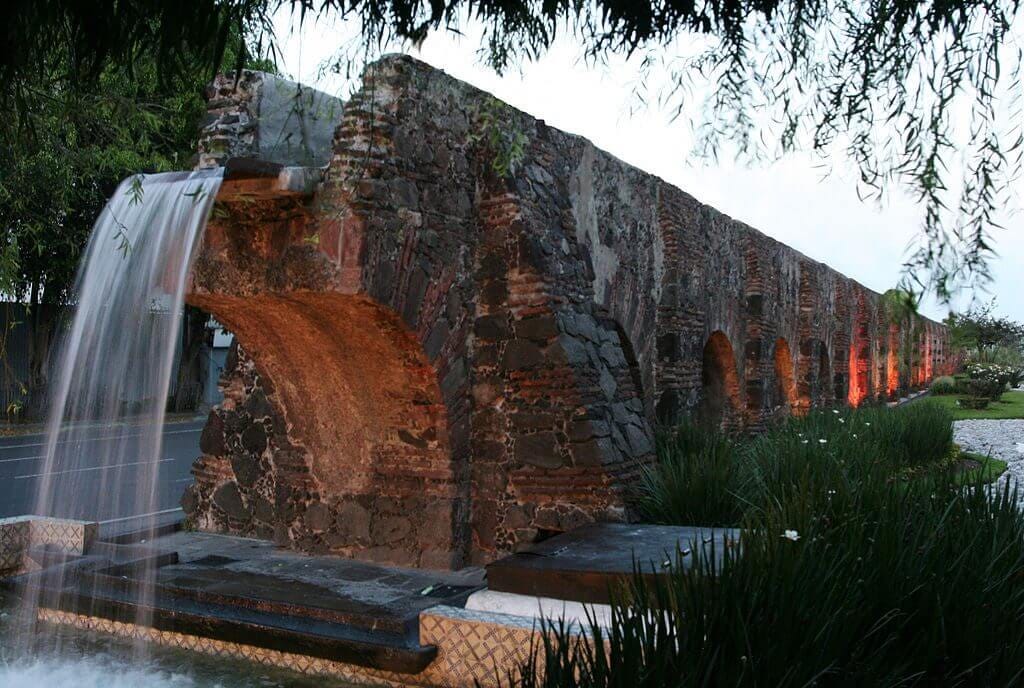
4 - The trouble with building a city on an island, like the great Aztec city of Tenochtitlan, is that it offers no freshwater of its own. So in the 1400s they built one of the earliest aqueducts, running from the springs at Chapultepec. The first version, mud and clay, couldn’t survive heavy rain and time, so in 1449 Nezahualcoyotl ordered it rebuilt, this time in wood, carved stone, and compacted soil, with sections of hollowed log raised high enough for canoes to pass beneath. That version fell too, torn down by the invading Spanish. What they built in its place still stands, in part, near Metro Sevilla today.
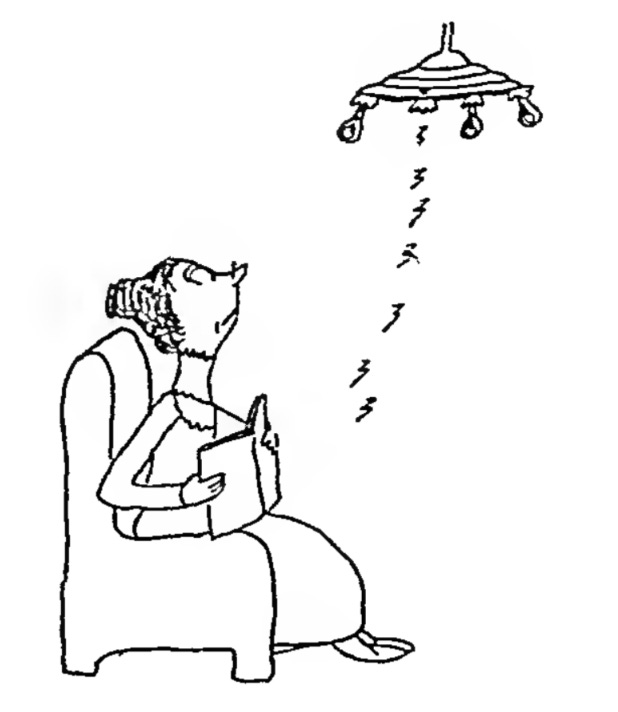
5 - Misoneism, a new word for me this week, refers to an unreasoning fear and hatred of new ideas. It was parodied by the American humorist James Thurber in an 1861 issue of Britain’s magazine Punch. It depicts a figure inspired by his Aunt, who he wrote was afraid that electricity was “leaking all over the place.”
6 - Malcolm Lowry, in 1947’s Under the Volcano, writing with desperation about the particular terror of a love sliding towards ruin:
“Time is a fake healer anyhow. How can anyone presume to tell me about you? You cannot know the sadness of my life. Endlessly haunted waking and sleeping by the thought that you may need my help, which I cannot give, as I need yours, which you cannot, seeing you in visions and in every shadow, I have been compelled to write this, which I shall never send, to ask you what we can do. Is not that extraordinary? And yet do we not owe it ourselves, to that self we created, apart from us, to try again? Alas, what has happened to the love and understanding we once had! What is going to happen to it — what is going to happen to our hearts? Love is the only thing which gives meaning to our poor ways on earth: not precisely a discovery, I am afraid. You will think I am mad, but this is how I drink too, as if I were taking an eternal sacrament. Oh Yvonne, we cannot allow what we created to sink down to oblivion in this dingy fashion”
7 - In 1924, a young Jorge Luis Borges took on Joyce's Ulysses, and the review he produced is one of the great ones, sweeping yet compact. It begins like this:
“I am the first traveler from the Hispanic world to set foot upon the shores of Ulysses, a lush wilderness already traversed by Valery Larbaud, who traced its dense texture with the impeccable precision of a mapmaker…but which I too will describe, even though my visit within its borders has been inattentive and transient. I will speak of it with the license my admiration lends me and with the murky intensity of those ancient explorers who described lands new to their nomadic amazement, and whose stories about the Amazons and the City of the Caesars combined truth and fantasy.”
What a thrill to witness a great writer experiencing the excitement of encountering another in real time! He goes on to describe Joyce as “bold as the prow of a ship, and as universal as a mariner’s compass.”
And of course there is the most famous compliment of all, that sticks to Joyce even today: “He is a millionaire of words and styles.”
8 - Borges also wrote a poem about Joyce which clearly leaps off from his reading of Ulysses, capturing the way in which the novel finds, in a single ordinary day, a mirror onto eternity. When you write it like that, it’s no wonder the great Argentine metaphysician was such a fan.
James Joyce
In one day of mankind are all the days
of time, from that unimaginable
first day of time, when a formidable
God prearranged the days and agonies,
to that other day when the perpetual river
of earthly time flows round to its headwaters,
the Eternal, and is extinguished in the present,
the future, the past, the passing — what is now mine.
The story of the world is told from dawn
to darkness. From the depths of night I’ve seen
at my feet the wanderings of the Jews,
Carthage destroyed, Hell, and Heaven’s bliss.
Grant me, Lord, the courage and the joy
I need to scale the summit of this day.
That's all for another week! All the best until next time
“A millionaire of words and styles.” Ah, Borges - how delightful that your compliment applies equally to yourself as much as Joyce.
James Thurber born December 8, 1894, died November 2, 1961 (age 66 years) so a 1961 (not 1861) issue of Britain’s magazine Punch?