
The Scrapbook — No. 26

Inspired by the heatwave, a very brief social history of sun-tanning.
1 -
“Look: the sun has spread its wings over the earth to dispel the darkness.
Like a great tree, with its roots in heaven, and its branches reaching down to the earth.”
Judah Al-Harizi (C.1170-1235) Translated from the Hebrew by T. Carmi
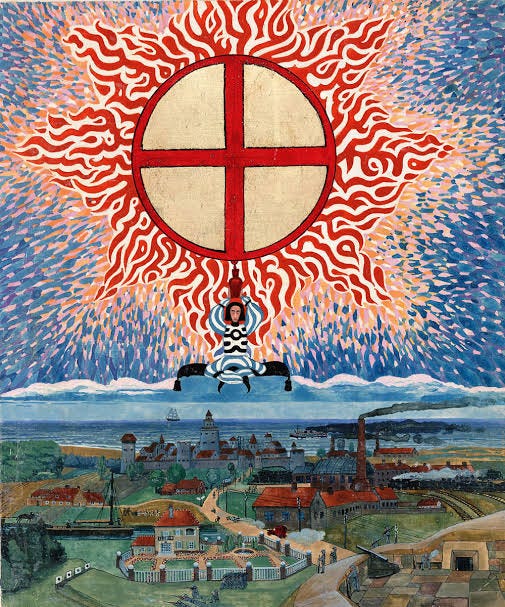
From Carl Jung's The Red Book
2 - There’s a heatwave across Europe, and it’s even reached the rainy isle I call home. It’s time, as Kevin Coyne once sang, “to get some sun on our muscles.”
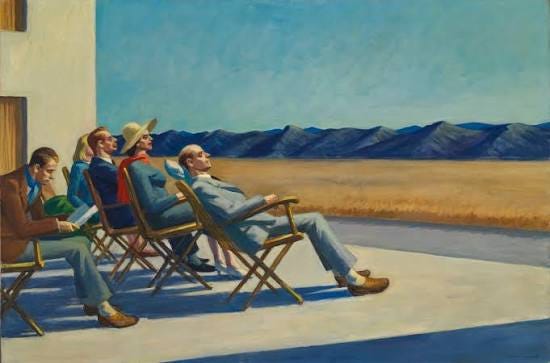
Edward Hopper, People in the Sun, 1960
But basking in the sun to get a bronze complexion is a relatively new phenomenon, only emerging in France in the interwar period.
The Humanities Library has a community of 20,000 followers and over 8,000 subscribers, all of them drawn to philosophy, art, literature, and the strange corners of human experience. If that sounds like you, a paid subscription unlocks the full archive, where we go into far more depth on related themes and ideas.
3 - This, of course, came after centuries of celebrating paleness.
Chaucer celebrated it (“White was her face”), Spencer’s ideal beauties were “lily white,” Shakespeare’s Juliet was a “snowy dove.” The Elizabethans even turned to cosmetics in search of the coveted “alabaster” complexion. A popular recipe consisted primarily of white lead mixed with vinegar.
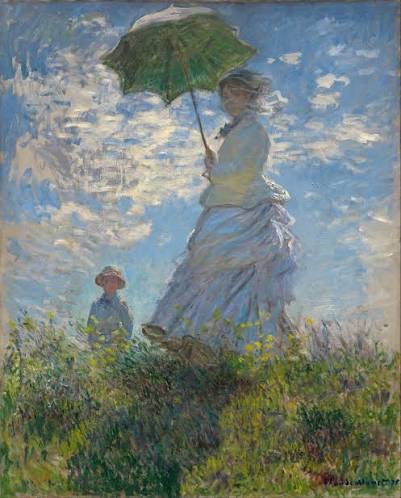
La promenade, Claude Monet, 1875
The reasons for this are well documented. Pale skin mostly signalled wealth, indoor living, aristocratic status and freedom from agricultural labour. But why did it change?
4 - There’s a great bit of mythology surrounding the invention of tanning, with some attributing its invention to Coco Chanel, who accidentally got sunburnt while visiting the French Riviera and unwittingly started a trend.

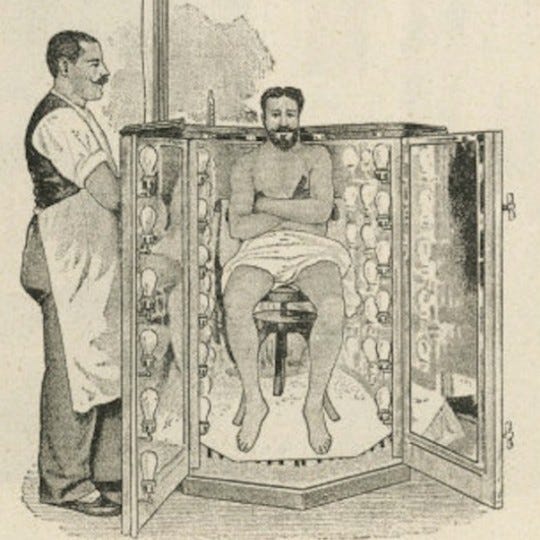
5 - A more convincing explanation lies in medicine. Through the final decades of the nineteenth century, a sequence of discoveries recast sunlight as a physiological necessity. In 1890, Theobald Palm established that exposure to sunlight was critical to bone development in children. A year later, John Harvey Kellogg (yes, of the cornflakes) developed the incandescent light bath, a device that counted among its triumphs the gout of King Edward VII. In 1903, the Danish physician Niels Finsen received the Nobel Prize for Medicine for his light therapy, which had achieved considerable results against rickets and lupus vulgaris.
A scientific expedition set out for Tenerife in 1910 to formally assess the claims of heliotherapy and returned with a unanimous verdict. Sunbathing had been upgraded from idleness to prescription, and the upper classes, who perhaps required medical sanction before permitting themselves the pleasure, were happy to comply.
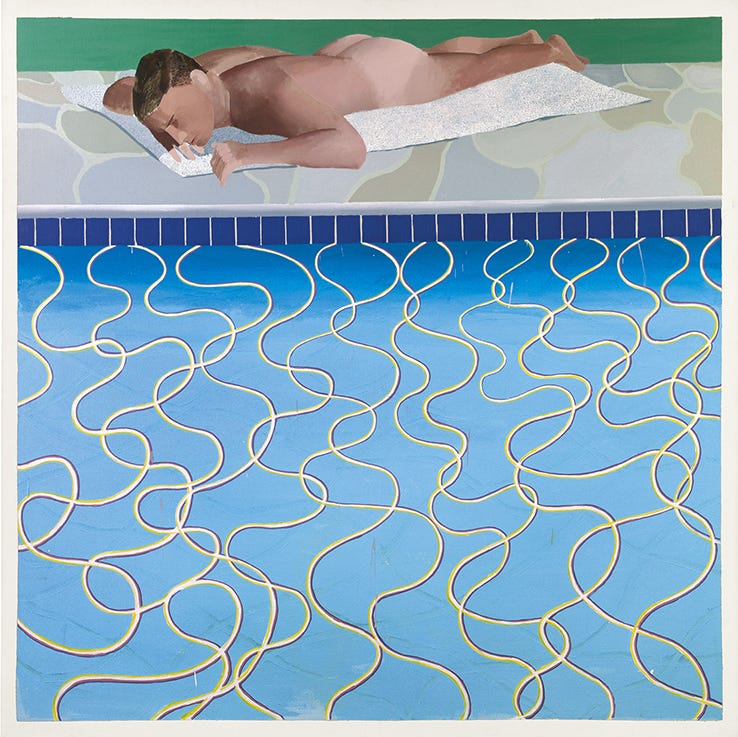
David Hockney, Sunbather, 1966
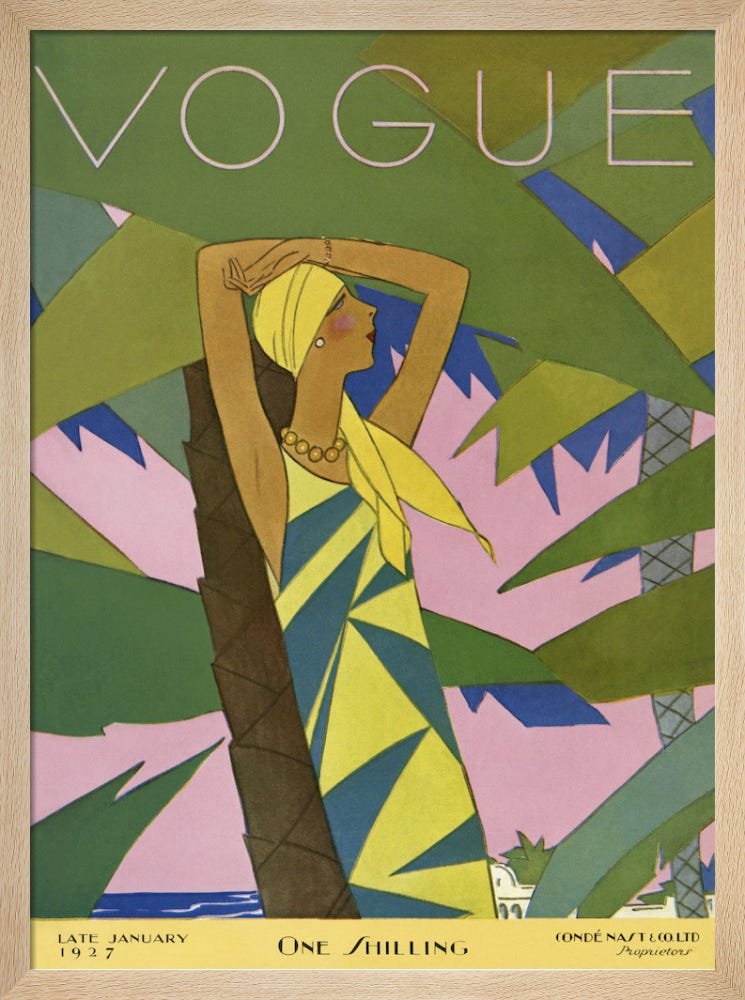
6 - The cultural machinery followed close behind. In 1927, a watershed moment: Vogue featured a suntanned model on its cover.
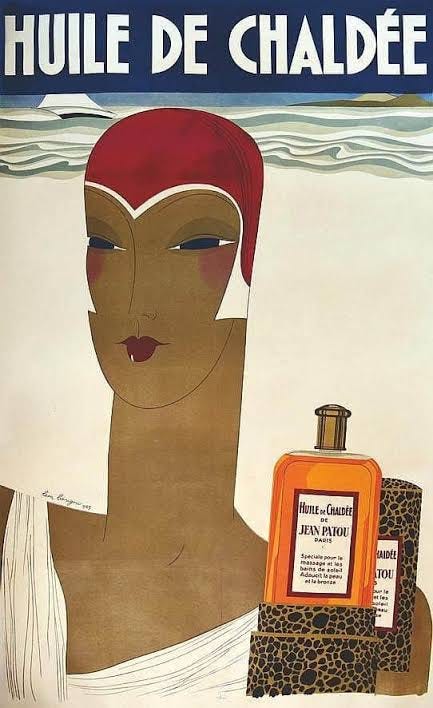
7 - Designer Jean Patou read the zeitgeist. Also in 1927, he released Huile de Chaldée, the first commercially produced suntan oil.
The science, the cultural arbiters, and the market had arrived, simultaneously, at the same desire.
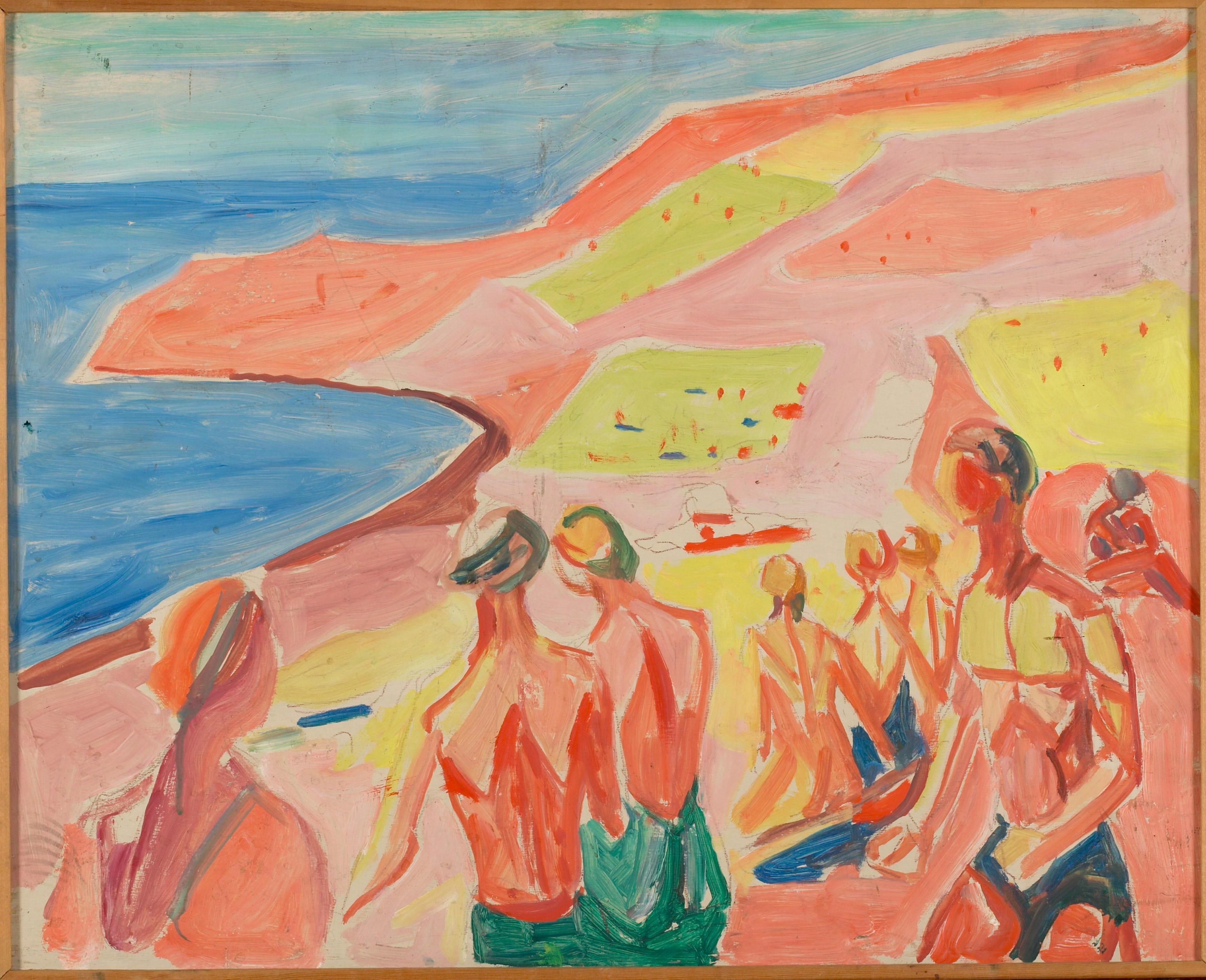
Edvard Munch, People Sunbathing in a Bay, 1940-42
8 - By the eighties, we were catching rays wherever we could find them.
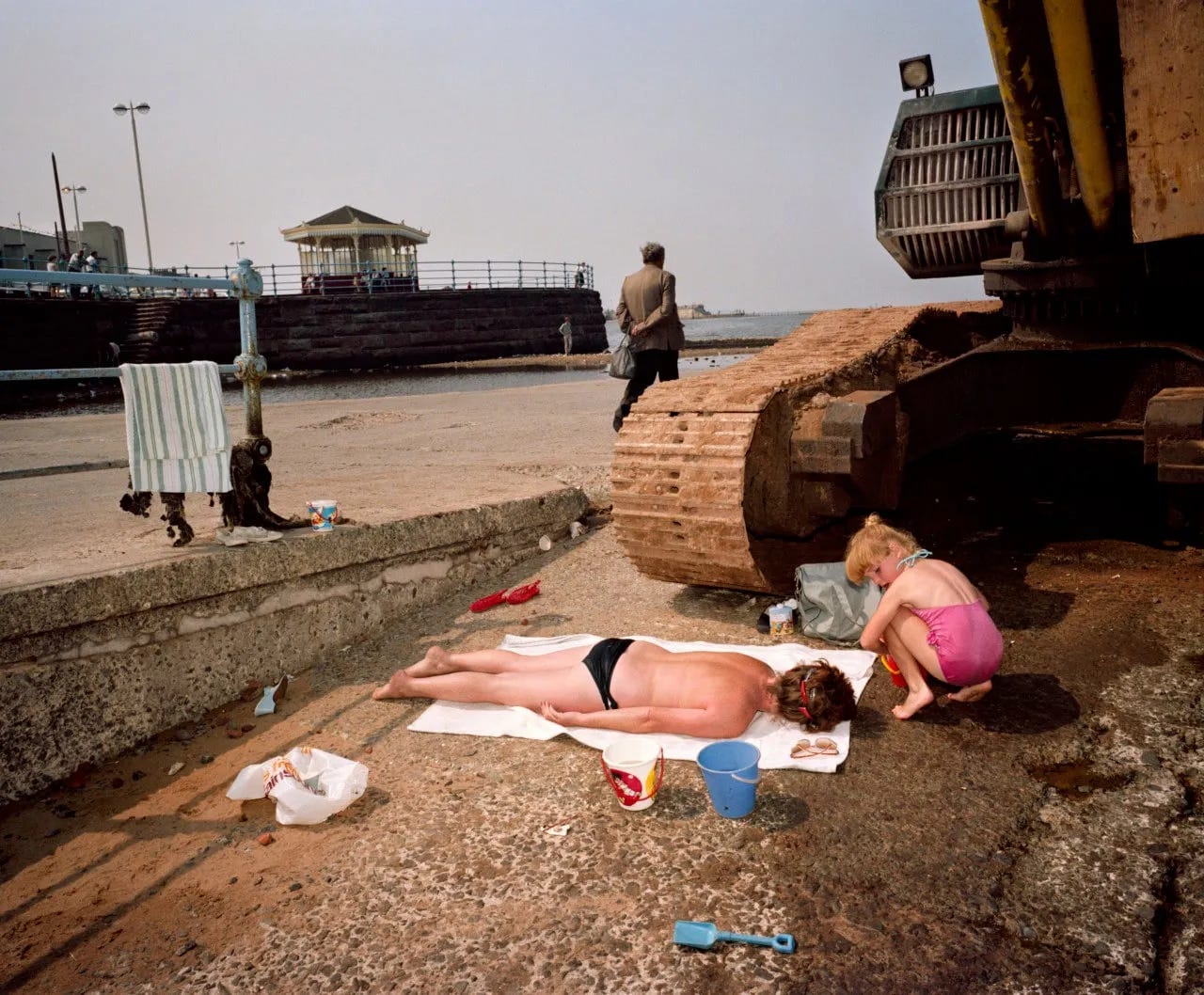
Martin Parr, Sunbathing by digger, New Brighton, England, 1983-85
All the best until next time
Hard working or pure survivalists of the "good old days" in Europe, mainly outdoor "plebs" looked darker aka tanned, all year round mainly due to exhaustion, poor hygiene, alcoholism and violence. At best they would look like suffering from severe case of rosacea, particularly in the North. So paleness was considered proof of affluence and high class. Of course when the middle class appeared and rose, the working class evolved into more human production and living conditions, so, the financial elites had to come up with another badge of "honorary excemption and excellence".
Amazing!!! Thank you.