
How To Avoid Sleepwalking Through Life
Viktor Shklovsky and the art of seeing the world as if for the first time

Source: Viktor Shklovsky, Theory of Prose, Originally written in 1925, translated by Benjamin Sher, Chapter One, Art as Device
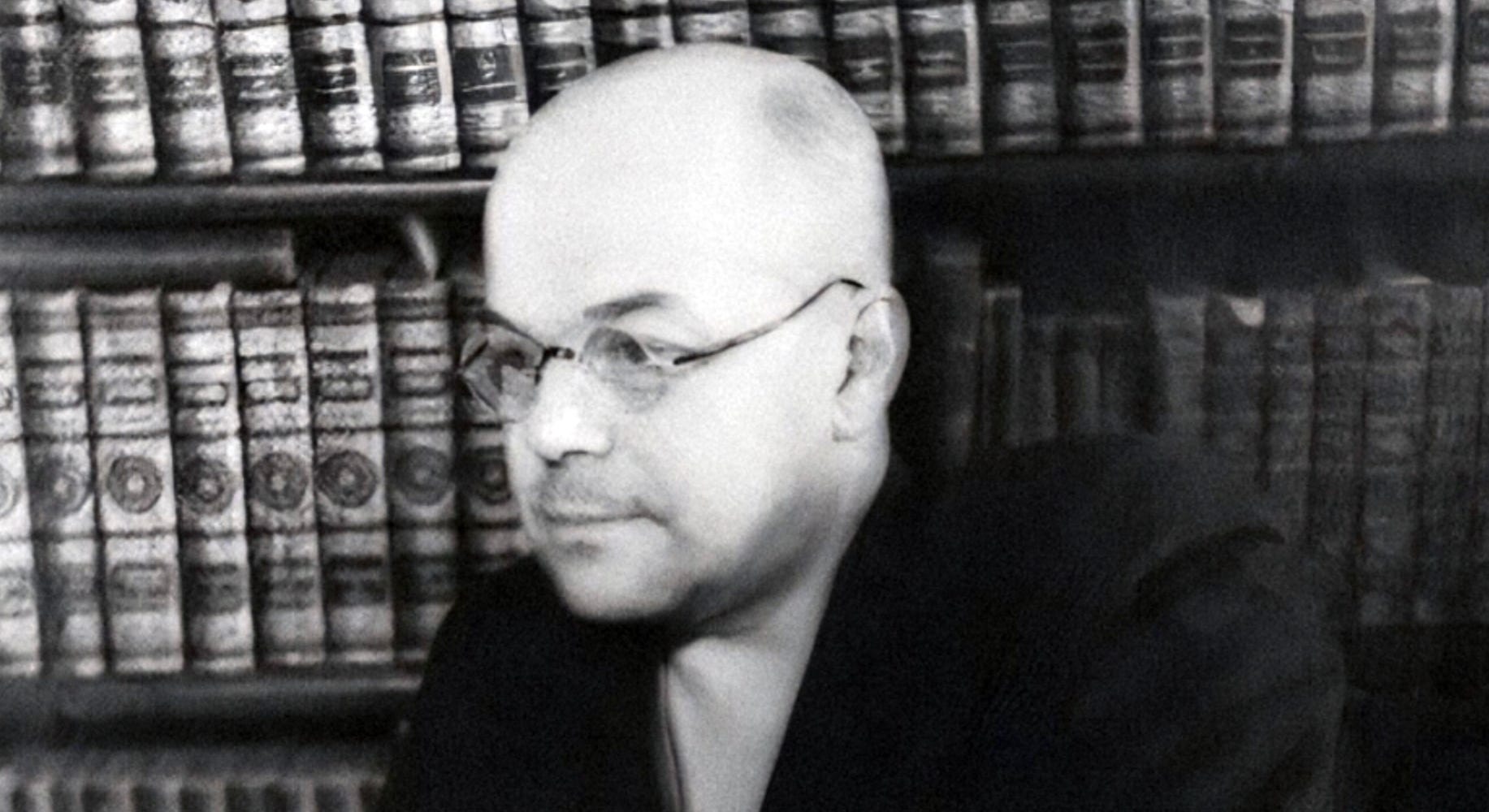
“And so, in order to return sensation to our limbs, in order to make us feel objects, to make a stone feel stony, man has been given the tool of art.”
Let’s begin this week with an amusing little mental image of Leo Tolstoy standing in his living room, cloth in hand, staring at the sofa. He had meant to dust it, but then again, as he reports in his diaries, perhaps he already had? At this point, there was simply no way of knowing. The action, if it had indeed occurred, had occurred without a witness. His body had been apparently present, moving through the space, performing the actions (or was it not performing the actions?) but his brain had been elsewhere, possibly on other matters, possibly daydreaming, possibly on autopilot, allowing the morning to drift gently past him.
We. Have. All. Been. There. My wife would accuse me, in fact, of spending most of my waking hours in a state not dissimilar to Tolstoy’s. It’s the familiar feeling you get when you arrive somewhere, maybe work or the school gate, and realise you have no memory of the steps you took to get there. It’s the feeling you get when you forget, whilst in the process of completing a domestic task, what the domestic task you should be completing actually was. If you’ve never stood in the doorway of a room asking yourself what on earth you came in here for then, I’m sorry, I simply cannot hope to understand the way your brain works.
When Tolstoy wrote about his moment with the sofa later that evening, on 1st of March 1897, he was faintly alarmed by his own passivity. Could it be possible that enormous stretches of his life, of any life, were being lived at precisely this level of non-registration? The body moving, the days passing, but none of it really felt or experienced? “If the whole complex life of many people is lived unconsciously,” he wrote, “then it’s as if this life had never been.”
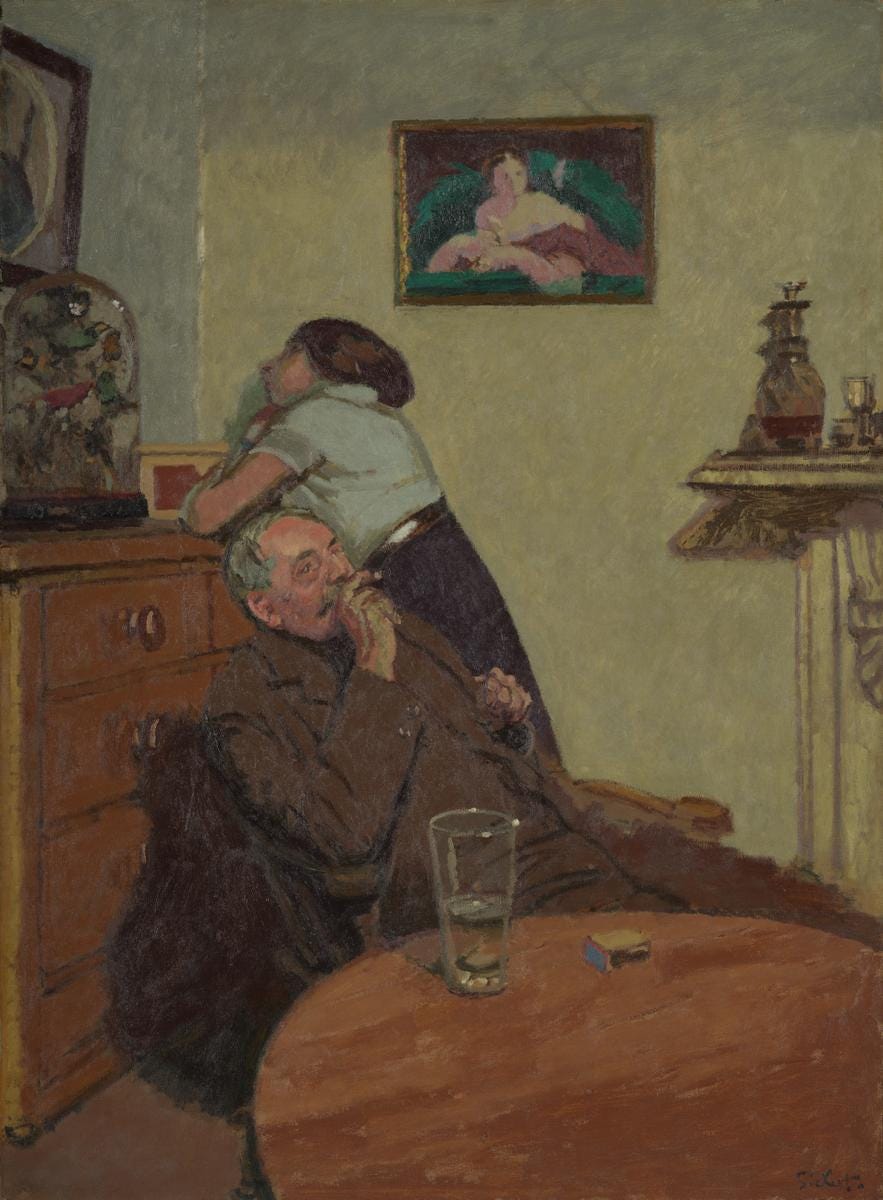
Walter Sickert, Ennui, c.1914
The problem here isn’t really distraction, or perhaps we should say it isn’t always distraction. The human mind is a ruthlessly efficient machine for reducing the cost of the already-known. Once a thing has been encountered and categorised, it need not be genuinely encountered again. Instead, it can be recognised, which is a very different thing and requires almost no cognitive effort at all.
It’s a bit like what happens when you say a word out loud fifteen or twenty times. By around the seventh or eighth repetition, the word begins to dissolve and its meaning just sort of evacuates. Psychologists call this semantic satiation. Its a phenomenon that proves that meaning is not a fixed property of words but something the mind actively generates. And the mind, like any labouring thing, can tire of its task.
What is true, then, of a word said twelve times is true, at a slower tempo, of nearly everything. When that drive to work is encountered repeatedly, it is genuinely encountered less and less, becoming instead filed, processed, and almost completely discarded. It is, like Tolstoy said, quite worrying to think of how much of life is lost in this way.
In the early 1920s, a Russian Formalist critic named Viktor Shklovsky sat down to write about this problem. His topic was the slow erosion of experience by habit, and what, if anything, could be done about it. The essay he produced is called Art as Device, and it makes for the opening chapter of a larger work called Theory of Prose. The essay is twenty-five pages long and offers its readers a reliable weapon against this very particular kind of blindness, something that he claims will restore the sensation of the-thing-itself, which habit has stolen from you without your noticing.
The rest of this essay — including an account of Shklovsky’s concept of ostranenie and what it might mean for how you write, and how you live — is available to Humanities Library members. Click below if you feel inclined to join our little club.
