
Avoid Living Estranged from Your True Self
Carl Jung on Meeting Your Shadow

Sources: C.G. Jung, Collected Works and C.G. Jung Letters, Vol. 1: 1906–1950
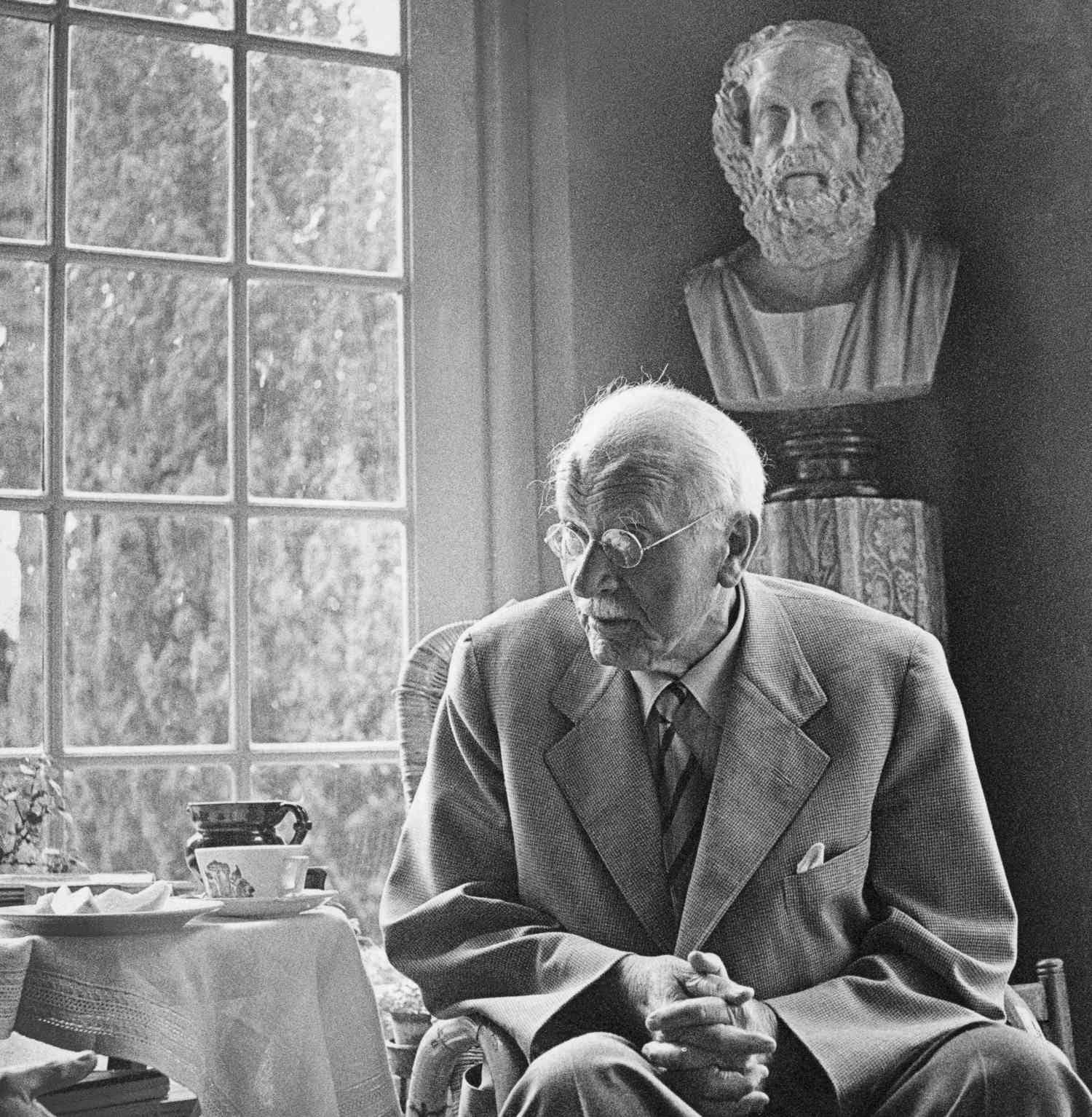
“Enlightenment work[s] not by imagining yourself full of light, but by making the darkness conscious”
I shall be telling this with a sigh / Somewhere ages and ages hence: / Two roads diverged in a wood, and I— / I took the one less traveled by, / And that has made all the difference.
Robert Frost wrote those famous lines when he was around forty, an age when it feels natural to start thinking about the life you’re living as merely one draft among incalculable others you might have written instead. Those closing doors on possibility bring with them a strange, specific grief for the versions of “you” that never made it to the surface. As the nun says in one of my favourite Armando Iannucci sketches, depicting a home for middle-aged men, “there is not now a single man in this room who will ever be an astronaut.”
We already have a term for this feeling, of course. We see a person of around Frost’s age reaching back for the road not travelled in youth, and we call it, usually with a snigger, a “midlife crisis,” shorthand for sports cars and sudden marathons. But the comic element of the phrase has increasingly come to disguise its real subject, which is grief, plain and ordinary, for the people we once fully intended to be and never became. One of the most moving lines in British folk music belongs to Duncan Browne, who once sang that “there was a house, a house on a hill. We never bought it, and I don’t think we ever will.”
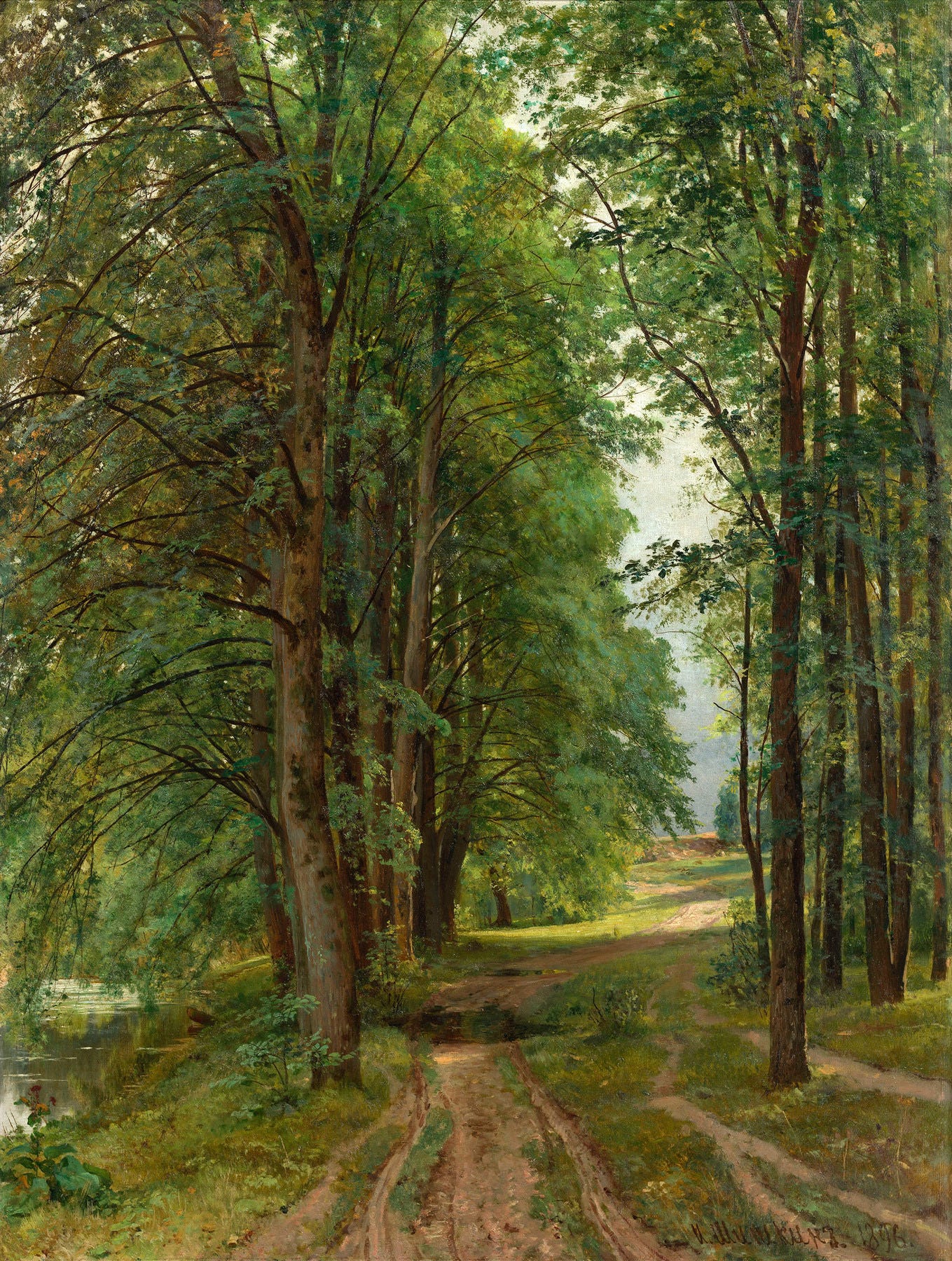
Forest Road, Ivan Shishkin, 1876
Anyway. This article is about Carl Jung, who I can’t quite believe I haven’t written about yet in almost two years of this newsletter, and who spent much of his working life taking this kind of feeling very seriously indeed. He had rather a lot to say about that house on the hill, about the astronaut none of us became, and where exactly that unlived life goes once the door on it closes.
The Humanities Library has a community of over 22,000 followers and 9,000 subscribers, all of them drawn to philosophy, art, literature, and the strange corners of human experience. If that sounds like you, a paid subscription unlocks the full archive, where we’ve touched on similar themes before. If you clicked on this, perhaps you’d also be interested in:
We should start with some definitions, especially if this is your first time encountering Jung’s psychology. It’s full (as is all psychology, in my experience) of egos and consciences and personas and other such terms to describe the layers of the self we spend our whole lives half-aware of. Best to start on solid ground, then, with the one you already know.
Start with the bit of you reading this sentence now, the “I” that gets up, makes the coffee, perhaps even has opinions about the news. This is what Jung called the ego, and it’s probably worth taking a moment to disentangle the word from the inflated, faintly narcissistic thing the word has come to mean in casual usage. For Jung, the ego is more like the centre of your conscious awareness, the organiser of thought and feeling. It isn’t the whole of you, as we’ll see in a moment, but maybe it thinks it is, most of the time, because it’s the only bit with a view.
Around the ego sits something Jung named the persona, borrowing the word from the masks worn by actors in Roman theatre. Your persona is the version of you built for public consumption: the competent professional, the reliable friend, the calm parent at the school gates (I do try). It isn’t fake, exactly. It’s more like a diplomatic uniform, useful and necessary, the self you present so that society knows roughly how to deal with you. The trouble starts when you forget you’re wearing it. When the uniform becomes, in your own mind, the whole person underneath.
And underneath is where it gets interesting.
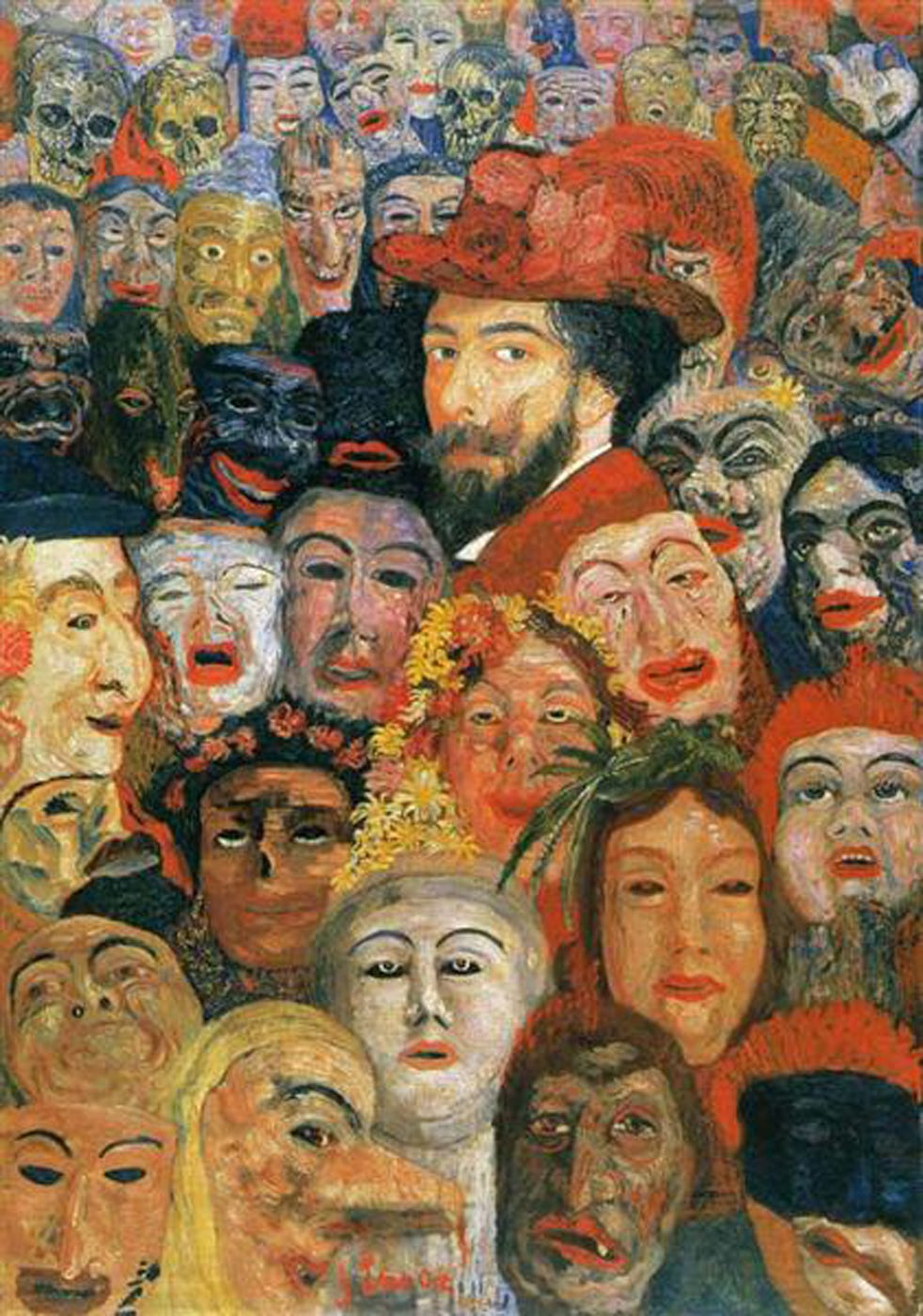
Self-Portrait with Masks, James Ensor, 1899
Jung inherited from Freud the idea of an unconscious, but he built on it significantly. Beneath the ego, for him, sits what he called the personal unconscious, the cellar of everything you’ve forgotten, repressed, or never quite let yourself notice: the resentments you’ve buried, the ambitions you’ve shelved, the version of yourself that wanted the art school place instead of the “sensible” degree. Here he is in Collected Works, Volume 8: The Structure and Dynamics of the Psyche:
“Everything of which I know, but of which I am not at the moment thinking; everything of which I was once conscious but have now forgotten; everything perceived by my senses, but not noted by my conscious mind; everything which, involuntarily and without paying attention to it, I feel, think, remember, want, and do; all the future things which are taking shape in me and will sometime come to consciousness; all this is the content of the unconscious”
But the most interesting and challenging part of Jung’s design is his belief that there was a second, older layer beneath even that. The collective unconscious, he called it, a kind of bedrock shared by everyone, stocked with archetypes rather than personal memories: recurring patterns and figures — the Hero, the Wise Old Woman, the Trickster — that show up in myths and dreams across cultures that have never met one another, because they’re built into the basic architecture of being human. More on this is a future article, I’m certain, someday.
You don’t need to accept the cosmic scale of this claim to find the cellar metaphor useful. Most of us are living almost entirely on the ground floor, ego and persona, while something considerably larger and older hums away beneath our feet, sending up the occasional signal in the form of a dream, a slip of the tongue, or an inexplicable wave of feeling looking at a high school photograph in a dusty loft.
If the ego and the persona are the parts of you fit for public consumption, there’s a third character in the house, someone Jung rather ominously called the shadow. Put simply, the shadow is everything about yourself you’ve disowned: the traits, urges, and impulses that didn’t fit the persona you were building, so you pushed them down into the cellar and locked the door. Don’t be fooled by the sinister name; these traits are not necessarily anything monstrous. Often it’s things as mundane as ambition, anger, laziness, envy, or a hunger for attention, qualities that a well-brought-up person learns early to be ashamed of and buries rather than owns.
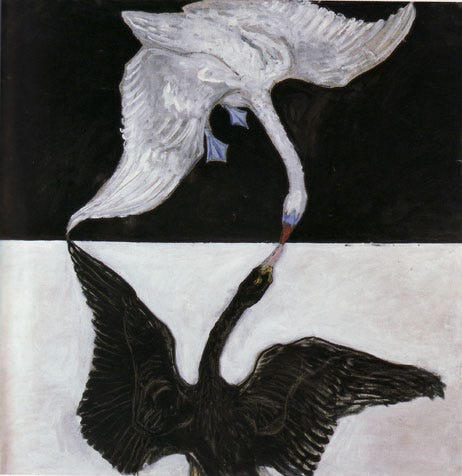
The Swan (No. 1), Hilma af Klint, 1914-1915
The trouble is that, for Jung, what gets buried doesn’t simply disappear. One of the things that happens is it gets projected onto other people. Jung’s insight, and it’s an uncomfortable one, is that the people who irritate you most disproportionately are very often carrying a piece of your own shadow for you. You’ve disowned the trait in yourself, so you find it unbearable when someone else wears it openly.
Crucially, Jung’s answer to the shadow was never to defeat it or try to make it vanish. His approach was one of integration rather than elimination. The shadow, for him, must be acknowledged. Only then can it begin to offer you the information you need to truly understand yourself. Jung thought that meeting your own darkness was, in fact, “the way enlightenment worked, not by imagining yourself full of light, but by making the darkness conscious.”
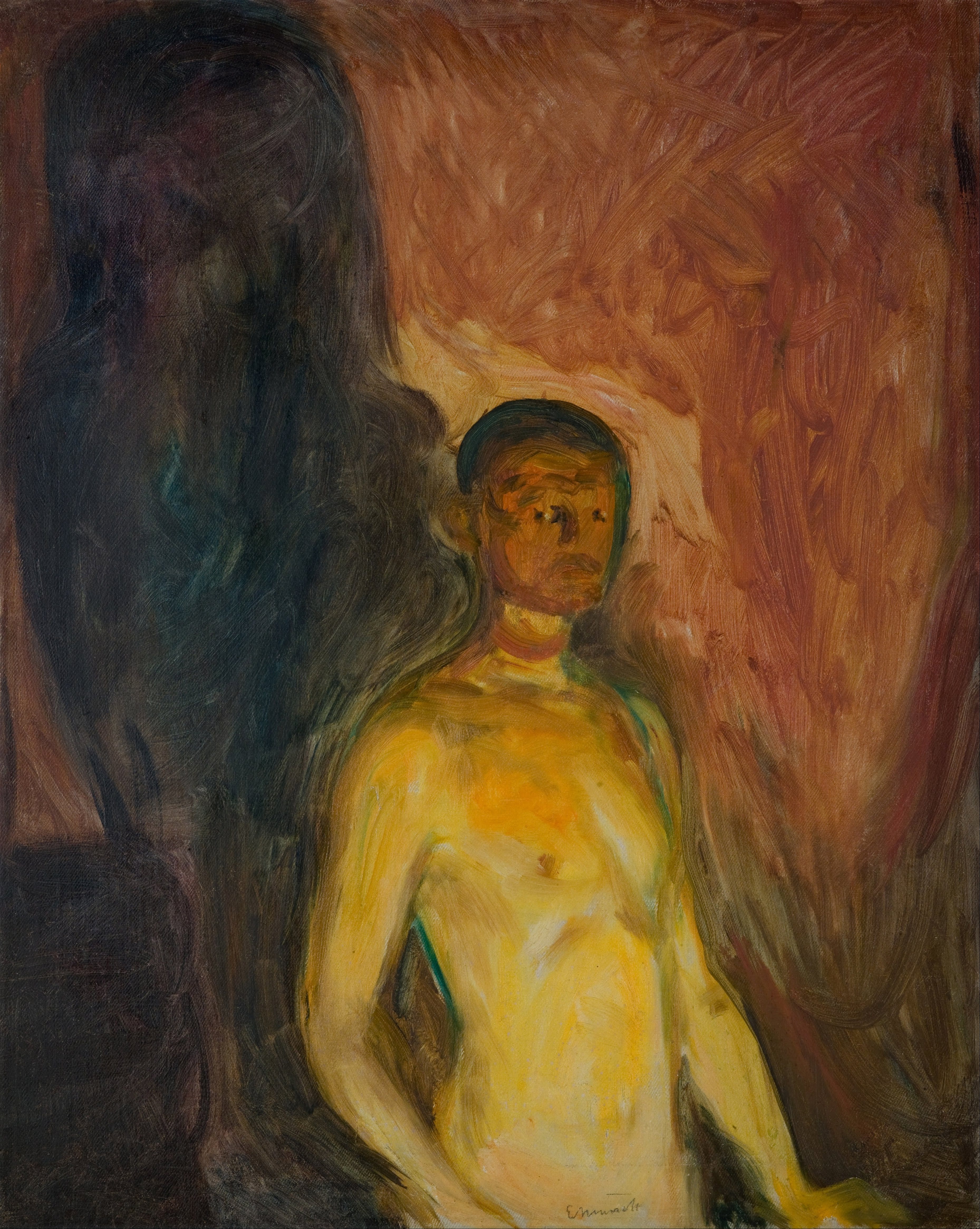
Self-Portrait in Hell, Edvard Munch, 1903
One last definition before we move into the practical psychology. Jung always treated what he called the self as separate from the ego or persona, and larger even than the personal unconscious. If the ego is the room you happen to be sitting in, and the persona is the front door you answer to visitors, and the shadow is the locked cellar you’d rather steer visitors away from, then the self (he says, knowing he is extending his metaphor way too far but ploughing on anyway) is the whole house. Every room you’ve furnished and every room you haven’t got round to building yet.
I think the important part of this is the recognition that follows, which is that the ego, the part of you doing the thinking, is not actually in charge of the property. It’s a tenant (sorry, it’s difficult to stop), perhaps one with excellent taste but ultimately very limited access. So how do we begin to get to know, and live within, the rest of the house?
Jung had a name for a project of this sort, and it’s what we’ve been steadily building towards as we’ve been wading through all these definitions. He called it individuation, and he described it as something akin to the process of becoming an individual, a person who has stopped being scattered across other people’s expectations and started operating from the whole of themselves, shadow included.
In practice, this means the ego learning it isn’t the only occupant of the house and the shadow being let up out of the cellar and given a seat at the table. It’s the whole slow, undignified business of learning what you actually want, as opposed to what you were trained by society to pretend you wanted.
Jung wasn’t exactly offering a clear route of how you get to this place, by the way. Asked, in a letter, how a person ought to live, he replied that there is no way of individuating that is “prescribed,” no map you can be handed in advance, only the discipline of doing “the next and most necessary thing” and trusting that the direction reveals itself as you walk in it rather than before you set off.
Now, I do recognise how useless, practically speaking, the above paragraph was, and whilst I will be respectful enough to Jung’s legacy not to turn him into a self help writer, I do want to offer something that’s a little more possible to work with. Luckily, Jung did leave behind a few genuinely practical habits of attention, things he did himself and asked his patients to try, that are worth exploring before we wrap up.
He kept a dream journal for most of his adult life, on the theory that dreams are messages sent up from the parts of the house the ego doesn’t have a key to. He developed what he called active imagination: sitting with a strong feeling, or an image from a dream, and letting it develop further on the page rather than filing it away and moving on. And he paid close, deliberate attention to his own irritations, treating each disproportionate flash of annoyance at another person as a small, unflattering clue rather than an invite to sit atop a high horse for an afternoon.
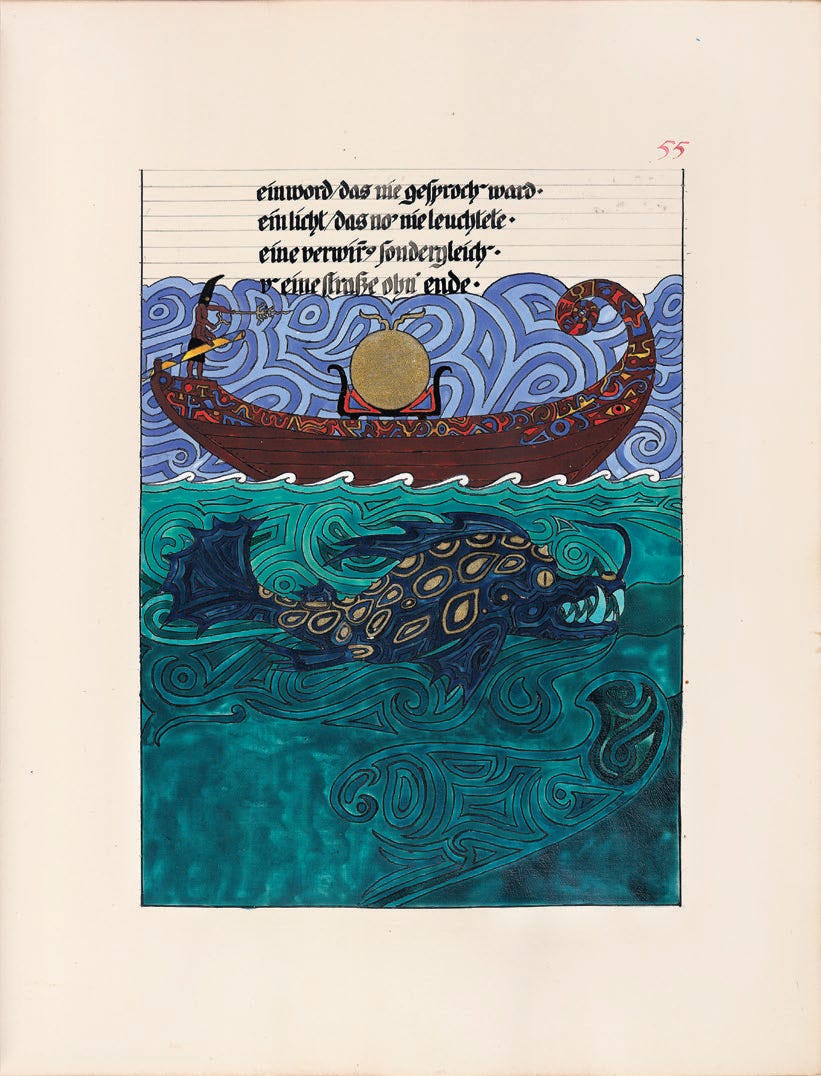
Illustration for The Red Book, Carl Jung, c. 1930
It would be neat to finish here with the sense that finding your shadow and shaking its hand puts everything right. Jung would have been a lot more careful than that. He didn’t think individuation had a finish line, and he was suspicious of anyone who claimed to have crossed one. The process tends to disrupt precisely the arrangements, professional and domestic, that took years of careful persona-building to construct (I haven’t told the wife yet that my shadow self wants to move us all into a camper van).
If I did, pretending for the moment that I hold enough domestic decision-making power, move us all into a camper van, there’d be plenty of figures in my life ready to label it as evidence of a mid-life crisis, and perhaps they’d be right. But there is a difference between a crisis that happens to you and a descent you choose to make on purpose, however incomplete the map.
It’s worth taking the time, and Jung’s whole body of work amounts to an appeal for us to do just this, to think back to those paths, like the 40-something Robert Frost once did so famously, and to imagine the person we might have become if we’d forked off in a different direction. If we were to take Jung at his word, and for what it’s worth I think I do, that path untravelled, that life unlived, doesn’t just evaporate but persists, somewhere, beneath the day-to-day surface of things, sending up signals in the form of dreams and vague pensive feelings.
I’m too old to become an astronaut, that much remains true. But perhaps there’s an astronaut somewhere down in the cellar of my unconscious. The question, really, is whether I’ll ever be brave enough to find out what else is down there.
Something to think about:
Jung says integration, not elimination, is the goal. But some shadow contents (real cruelty, not just "ambition") seem worth suppressing rather than welcoming back to the table. Surely there's a line somewhere, but how do we know where to draw it?
Klint’s ‘The Swan’ is a brilliant image for the shadow. I also liked your observation that the people who irritate us most often carry a piece of our own shadow. It reminded me of a wonderfully sharp line from Gore Vidal: “Curious how we always detect (and despise) in others our own faults.”
I think Jung means that it's the suppression that makes the shadow contents dangerous and undermining to the ego-persona, and so prevent the potential full self being developed. rather than the absolute nature of them, eg Frankenstein's monster wanted to love and be loved, he turned murderous because of the rejection, ie being shut in the cellar because of his unacceptable external appearance. Jung wanted to point out these psycholgical formations had real physical effects, could coalesce into a mass movement such as fascism. The Homo Sapiens person could do with a visit to Jung's consulting room!